Event 1
Suicides of Hannah Östlund and Jessica Friberg
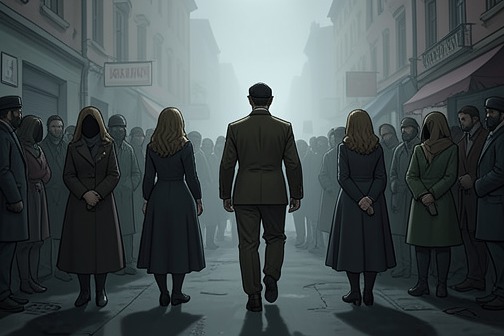
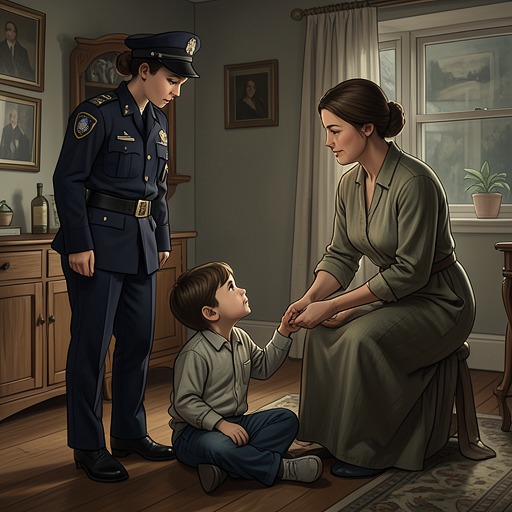
The suicides of [Hannah Östlund](entity:character-recall-character-hannah-stlund-b60d62b6b31f) and [Jessica Friberg](entity:character-recall-character-jessica-friberg-0b38fa9a5d9f) close the immediate pursuit of two women identified as killers in several cases, while leaving the circumstances of their deaths unstated. [Jeanette Kihlberg](entity:character-recall-character-jeanette-kihlberg-0988accaa0dc) tells [Sofia Zetterlund](entity:character-recall-character-sofia-zetterlund-6c27defc5853) that [Hannah](entity:character-recall-character-hannah-fb0714f3cb68) and [Jessica](entity:character-recall-character-jessica-f1d7f2924a7f) killed [Karl Lundström](entity:character-recall-character-karl-lundstr-m-920c7f211774) and [Per-Ola Silfverberg](entity:character-recall-character-per-ola-silfverberg-8565be641fd3), as well as the homeless woman found in [St Johannes Cavern](entity:location-recall-location-f0d0888df153); later, Commissioner [Dennis Billing](entity:character-recall-character-dennis-billing-acfe9582332e) treats the perpetrators as beyond the authorities’ reach. The deaths resolve the question of access to the suspects, not every question raised by the crimes.
## Disclosure and Identification
Jeanette delivers the news to Sofia during a conversation about the investigation. She says that the women’s responsibility for the murders is known and that their suicides will probably soon be reported in the papers. Her account identifies them not as peripheral witnesses but as the perpetrators in cases involving three victims: Karl Lundström, Per-Ola Silfverberg, and the homeless woman in St Johannes Cavern.
The disclosure unsettles Sofia, though she cannot bring herself to challenge Jeanette. Her response is shaped by her own knowledge of Hannah and Jessica, whom she thinks of as apathetic girls who like dogs rather than as murderers. The gap between that remembered image and Jeanette’s conclusion makes the revelation a rupture in Sofia’s understanding, even as she keeps her objection to herself.
## The Cases and Their Reach
The suicides follow an investigation that has repeatedly exposed violent deaths. At [Svartsjölandet](entity:location-recall-location-svartsj-landet-943db10f455d), Jeanette had already concluded that the killing of a second boy was probably connected to the first, making the investigation a double murder. A third boy was later found at the boules club below [Danvikstull](entity:location-recall-location-danvikstull-adffc11957eb); experts described his body as successfully embalmed. These discoveries establish the wider climate of the case, but the evidence does not say that Hannah and Jessica were responsible for the boys’ deaths, and their crimes should not be conflated with those murders.
The account of Per-Ola Silfverberg’s killing includes a line about slaughtering an animal by placing a knife at a particular angle. Jeanette considers the murder symbolic and raises the expression “capitalist pig” as a possible clue, while cautioning against settling on that interpretation. This detail shows how investigators read meaning into the crimes, but it does not establish a motive for Hannah and Jessica or explain their later deaths.
## Official Aftermath
The suicides are first presented through Jeanette’s report to Sofia, with newspaper coverage still anticipated. Later, at [Kronoberg Police Headquarters](entity:location-recall-location-kronoberg-police-hea-7c09446540df), Billing praises Jeanette for solving the case quickly and says that the perpetrators are beyond the authorities’ reach. His remark confirms the practical consequence of the deaths: the investigation can identify those responsible, but cannot bring them to account through ordinary proceedings.
The evidence gives no date, location, method, or stated reason for either suicide. It does not describe a final scene or indicate whether the women acted together. The event enters the narrative through other people’s statements and its effect on the investigation, rather than through an account of the deaths themselves.
## Significance and Limits
The suicides produce a bleak form of closure. Hannah and Jessica are named as responsible for multiple murders, but their deaths remove them from questioning and from any further direct confrontation with the consequences of those crimes. Their identification answers who killed the victims; it does not settle the motive, clarify every connection among the cases, or repair the dissonance Sofia feels between her memory of the women and the accusation.
By withholding the circumstances of the suicides, the narrative keeps attention on what can be established and what remains inaccessible. The investigation reaches a conclusion about the perpetrators, while the women’s deaths themselves remain a reported fact rather than a narrated event.
Event 2
Victoria Bergman’s childbirth and loss of Madeleine
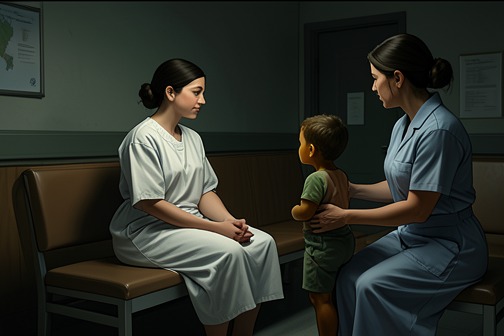
[Victoria Bergman’s childbirth and loss of Madeleine](entity:event-recall-event-victoria-bergman-s-chil-839a7ed03a53) Silfverberg is a pivotal separation shaped by a web of medical and legal records. Victoria later recounts giving birth in [Aalborg](entity:location-recall-location-98da6a44ccb4), being prevented from keeping or seeing her daughter, and encountering [Madeleine](entity:character-recall-character-madeleine-e1dd3336745a) with her foster family in [Copenhagen](entity:location-recall-location-copenhagen-aea5870325a0). The papers used to justify the separation present Victoria as legally incompetent and even place the birth four weeks earlier than it occurred, when she was still seventeen. Her account holds two consequences together: she was deprived of a meaningful choice, and she later dropped Madeleine, who survived.
## Birth and divided experience
Victoria tells the story while discussing Copenhagen and Aalborg, but struggles to find a starting point. She says she had a baby the previous summer in a hospital in Aalborg. The recollection is divided: in her inward account, the Reptile gave birth, endured the pain with little outward response, and withdrew afterward to recover. This persona gives the birth a place in Victoria’s divided sense of self without making the experience disappear; the account still belongs to a woman trying to explain what happened to her and to her child.
Madeleine was jaundiced and placed in an incubator. Victoria describes her as a small, vulnerable infant, then turns abruptly away from her in thought, trying to forget her. The movement between recalling the child and insisting on forgetting her reveals the loss as more than a past legal arrangement. It remains an experience Victoria cannot approach steadily: the baby is at once the daughter she wanted to see again and the child she tells herself to erase from memory.
## Paperwork and legal authority
Victoria explains that [Viggo Dürer](entity:character-recall-character-viggo-d-rer-c0ec61eab959) arranged the documentation surrounding the separation. She says she was drugged, taken to a doctor at University Hospital in Copenhagen, and made to sign papers. Among them, she recalls documents declaring her legally incompetent in Sweden and giving [Bengt Bergman](entity:character-recall-character-bengt-bergman-5bc3fd0478e8) power of attorney. Other papers assigned the baby a birth date four weeks earlier than the actual one. In Victoria’s account, the altered date and the declaration of incompetence worked together: the date represented her as seventeen rather than eighteen, while the incapacity documents supplied a basis for others to act in her place.
The paperwork matters not merely as a record of decisions but as the machinery that made those decisions difficult to challenge. Victoria describes documents prepared to answer competing claims about her age and the date of the birth. If she asserted that she had been of age, the declaration of incompetence could be produced; if she gave a date for the birth, another document supplied an earlier one. She sees this accumulation as deliberate protection for those who arranged the separation. The contrast is stark: her recollection is uncertain in places, but the records, with their official names and dates, appear designed to be treated as conclusive.
Victoria does not present herself as wholly without agency in what followed. She remembers being passive and believes she may share some blame, while also recognizing that her resistance had largely been broken down. Her account therefore does not reduce the event to a simple opposition between action and helplessness. She describes a situation in which the official process narrowed her choices, and in which her later self-reproach coexists with her understanding that others had arranged the terms on which she could act.
## Separation and the later encounter
After the birth, Victoria wanted to see Madeleine once more, but was refused. She eventually tracked her daughter down and found her with a foster family in Copenhagen. The encounter did not restore the relationship or give Victoria the chance to keep Madeleine. Victoria dropped the baby on the floor; Madeleine survived. Victoria entertains the possibility that she did it deliberately, but does not settle the question. She also judges herself as not mature enough to have a child and interprets her inability to hold on to Madeleine as evidence against herself. The event thus ends not with reconciliation, but with an action whose meaning remains uncertain to Victoria and whose consequences deepen her sense of guilt.
The later account also shows how institutional judgments continue to shape the family’s story. Madeleine’s claims, during treatment in [Denmark](entity:location-recall-location-denmark-c503f1b59838), that [Per-Ola Silfverberg](entity:character-recall-character-per-ola-silfverberg-8565be641fd3) had sexually assaulted her and that other men were involved were not believed; she was regarded as psychotic and severely delusional and was heavily medicated. That later treatment is not the same event as Victoria’s separation from her baby, but it echoes a central difficulty in Victoria’s account: the people with authority to classify and record a woman’s condition can determine whether her testimony is accepted. The daughter’s later experience therefore casts the earlier paperwork in a wider light, without resolving what happened in either case.
## Consequences and significance
The separation remains entangled with Victoria’s divided identity and with her struggle to narrate painful memories. She recalls the birth through the Reptile, alternates between wanting to see Madeleine and wanting to forget her, and cannot say with certainty whether dropping the child was intentional. These uncertainties do not erase the concrete sequence she does remember: a birth in Aalborg, a paper trail arranged by Viggo Dürer, a denied visit, and the encounter with the foster family in Copenhagen.
The records also connect this episode to the public history of Victoria’s case. In September [1988](entity:time-recall-time-1988-b48846afea21), the [National Board of Forensic Medicine](entity:organization-recall-organization-national-board-o-45cfe8c31c08) reported that [Victoria Bergman](entity:character-recall-character-victoria-bergman-b61a73067924) had been subjected to serious sexual abuse before reaching full maturity, and [Nacka District Court](entity:organization-recall-organization-nacka-district-c-c689b9b86be1) granted confidentiality for her personal details. That official language documents abuse while placing it within an administrative framework; it does not, by itself, restore the choices Victoria says she lost when Madeleine was born. Her story of the separation makes the gap visible between a person’s lived account and the documents that institutions use to authorize action. The event is therefore both a mother’s loss and a history of power exercised through diagnoses, dates, guardianship, and records.
Event 3
Victoria Bergman’s adoption of the name Sofia Zetterlund

[Victoria Bergman’s adoption of the name Sofia Zetterlund](entity:event-recall-event-victoria-bergman-s-adop-c540ee5379e5) turns a measure intended to protect her identity into an intimate act of self-naming. Given the chance to propose a name for her protected identity, Victoria borrows Sofia’s first name and surname, placing the latter in the form’s middle-name box. The administrative disguise becomes a durable personal identity: before the clerk has collected the paperwork, Victoria is already practicing its signature, and then waits for a bus into the city and her new life.
## Protection and the need for a new identity
Victoria’s new name arises within a formal process for protecting her personal details. In September [1988](entity:time-recall-time-1988-b48846afea21), the [National Board of Forensic Medicine](entity:organization-recall-organization-national-board-o-45cfe8c31c08) reported that she had suffered serious sexual abuse before her body reached full maturity. [Nacka District Court](entity:organization-recall-organization-nacka-district-c-c689b9b86be1) agreed to grant confidentiality for her personal details. The report’s clinical wording is cold and categorical; the protection it supports, by contrast, makes a new public identity necessary. The name change is therefore not merely a private reinvention. It is part of an official arrangement intended to conceal identifying information after the abuse she endured.
The paperwork does not, however, arrive with a name already assigned. Victoria expects another person to choose one, as though a new name will be issued along with her new ID number. Instead, the form gives her three empty boxes and asks her to suggest a first name, a surname, and, if she wants one, a middle name. The procedure places a consequential choice in her hands at the moment she expects administration to make it for her. Her protected identity is formally authorized, but its most recognizable element begins with her own suggestion.
## The name on the form
Victoria fills in the boxes in an unusual order. Without stopping to think, she writes Sofia as the first name. She leaves the surname box empty because she does not know Sofia’s middle name, then writes Zetterlund in the third box, the space designated for a middle name. The combination preserves the two parts of Sofia’s name that Victoria can supply, but the misplaced surname also records how the choice was made: not as a carefully completed conventional name, but as an immediate borrowing within the form’s constraints.
The choice links Victoria’s protected identity to Sofia personally. In the recovered account, Victoria addresses Sofia and acknowledges that she has stolen her name. That later recognition gives the administrative act a second meaning: what begins on a document as Victoria’s proposal also binds her new identity to another person. The evidence does not present a considered plan to take Sofia’s name; it says Victoria wrote it without really thinking. The significance lies in the outcome and in Victoria’s later understanding of it, not in an invented intention at the moment she filled in the boxes.
## From proposed name to practiced signature
Before the clerk has even collected the documents, Victoria begins practicing her signature. The speed of that gesture matters. The paperwork is not yet out of her hands, but she is already rehearsing the written mark by which the proposed identity can become usable. The name moves from the form’s empty boxes into an act she repeats for herself. In this sequence, identity is both assigned legal force through the protection process and made familiar through practice.
Victoria then sits on a bench at a bus stop and waits for the bus that will take her into the city and her new life. The scene gives the name change a physical departure without adding a destination or circumstances beyond those the account supplies. First comes the form, then the signature, then the wait. Her new identity is not simply an idea about who she might become: it is the name she has written, the signature she has begun to rehearse, and the threshold she waits to cross by bus.
## Recovered memory and the identity’s afterlife
The account of the naming appears as Victoria remembers everything, including her meetings with Sofia and a medical examination at [Nacka Hospital](entity:location-recall-location-9f9d875e697e). The recollection places the name’s origin within a wider return of memories that had not been accessible to her. It also changes how the name reads: what could have seemed only an administrative alias is revealed as a choice made from a specific personal connection and later recognized by Victoria as an appropriation.
The event’s force rests on the tension between concealment and attachment. The protected identity is supposed to shield Victoria’s personal details; the name she proposes instead carries Sofia’s name into her new life. An official measure of anonymity thus produces an identity that is not wholly detached from the person it is meant to obscure. Victoria’s practiced signature marks the beginning of that identity, while her later confession to Sofia exposes the bond—and the unease—embedded in it.
Event 4
Madeleine’s capsulotomy
[Madeleine’s capsulotomy](entity:event-recall-event-madeleine-s-capsulotomy-b1554afdf0f4) was an attempt to treat her compulsive behaviour and disruptive conduct by cutting nerves in the brain’s internal capsule. The operation failed on its own terms: rather than easing the problems it was meant to address, it was followed by a near-total loss of impulse control alongside an apparent sharpening of [Madeleine](entity:character-recall-character-madeleine-e1dd3336745a)’s intellectual ability. Its retrospective account places an individual medical intervention within a broader history of disputed surgical practice and uncertain oversight.
## Identity and Context
The operation enters the narrative through an older psychologist’s account, begun with the information that Madeleine had undergone surgery several years earlier. The scene is therefore presented retrospectively: the procedure is not a current action but a past event being explained after its consequences have become relevant. That framing makes the operation part of a history to be interpreted, not merely a clinical fact to be recorded.
The account identifies Per Mindus as a professor of psychiatry and one of Sweden’s leading authorities on anxiety disorders and compulsive behaviour syndrome. During his time at the Karolinska Institute, he was introduced to neurosurgery and to capsulotomy, a technique that involved operating on the capsula interna, or internal capsule. The narrative supplies this background to show how a specialist’s authority and a developing surgical method came together in the treatment Madeleine received.
## Procedure and Intended Effect
In the plain-language explanation given in the account, capsulotomy involved cutting nerves in the internal capsule that were believed to contribute to mental illness. Madeleine’s operation was chosen because it was not considered fatal in the way lobotomy was, as far as was known, and because her compulsive disorder and disruptive behaviour were expected to abate. The stated purpose was therefore limited and therapeutic: to reduce the symptoms that had prompted treatment, not to produce a different kind of person.
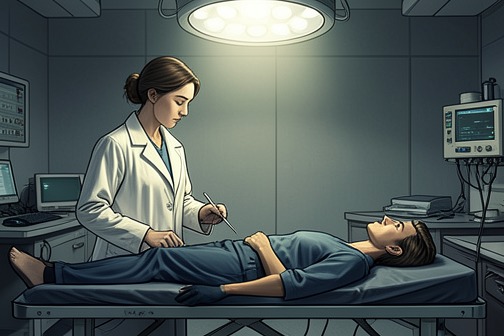
A brief image associated with the episode presents Madeleine unable to move, her arms fastened to a bed, looking up at a ceiling in a room described through the contrast of white and black. The account offers little procedural detail beyond the explanation of the technique, but this image gives the remembered operation a setting of enforced stillness. It also sharpens the distinction between the medical rationale, expressed in terms of nerves and symptoms, and the experience of the patient at the centre of it.
## Outcome and Contested Practice
The outcome was described as a complete failure, with effects opposite to those intended. Madeleine’s lack of inhibitions worsened, and her impulse control was said to have vanished almost entirely. At the same time, her intellectual ability appeared to become sharper. The contrast matters: the procedure did not simply leave the targeted difficulties unchanged. Its reported consequences included a substantial alteration in how Madeleine could regulate her actions, paired with an unexpected change in her intellectual functioning.
The account also places capsulotomy within a contested medical history. Criticism of Per Mindus’s use of the technique increased after it emerged that he had falsely claimed to have authorization for his experiments. A leading expert on compulsive disorders was reported to have warned of severe side effects. There was also criticism of a follow-up report: it was said to have been written by someone responsible for selecting patients for the operation and solely responsible for evaluating whether the treatment worked. These details do not establish that each criticism concerned Madeleine’s individual case, but they complicate the authority of the procedure’s evidence base and the confidence with which its results could be judged.
## Significance
The account joins a personal consequence to questions about medical judgment and oversight. The operation was justified by a particular expectation—that severing the relevant nerves could lessen Madeleine’s symptoms—yet the reported outcome sharply diverged from that expectation. The wider dispute over authorization, side effects, and the independence of evaluation makes the failure more than a single disappointing result: it raises questions about who was permitted to decide that the intervention was appropriate and who could credibly assess its effects.
Retold years later, the procedure also helps explain why Madeleine’s later behaviour cannot be understood simply by repeating the original diagnosis or treatment aim. The narrative records both the worsening loss of inhibition and the apparent increase in intellectual sharpness, preserving an outcome that resists a simple measure of success or failure. The operation remains consequential precisely because its intended therapeutic change and its actual effects did not align.
Event 5
Samuel Bai’s assault on Sofia Zetterlund
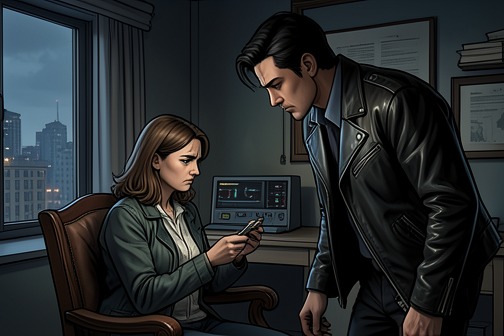
[Samuel Bai’s assault on Sofia Zetterlund](entity:event-recall-event-samuel-bai-s-assault-on-0d3d1b763d4d) emerges as a delayed memory of a violent rupture within their therapeutic relationship. Its significance lies not only in the attack itself but in the way it returns: Sofia recalls the sessions, the object she used to summon one of Samuel’s personalities, and then the actions she had not fully remembered. Later corroboration by witnesses on a ship gives the remembered event an external context, while the scene’s emphasis remains on the gap between what Sofia once knew and what she can now recover.
## Therapeutic Context
The recollection is rooted in Sofia’s repeated sessions with Samuel, a tall, muscular young man who initially appeared reserved and uninterested. At Sofia’s office at [Mariatorget](entity:location-recall-location-mariatorget-eb9baa0943d2), she suggested that they speak Krio rather than English. Samuel then became more communicative, and across session after session he spoke about growing up in [Sierra Leone](entity:location-recall-location-sierra-leone-fd5c25b396a9) and about abuses he had committed. The therapeutic connection therefore involved both disclosure and risk: Sofia was listening to accounts of his past while attempting to understand the different personalities that could emerge in him.
Sofia’s memory presents the sessions retrospectively, as a sequence she can now see with a new understanding. The attack is not introduced as an isolated encounter unrelated to treatment. It follows from an intervention within that setting: Sofia used an object to summon one of Samuel’s personalities. The clinical purpose of the action and its consequences are sharply at odds, making the office a place where efforts to understand him also exposed the limits of Sofia’s safety and control.
## The Motorcycle and the Attack
To summon one of Samuel’s personalities, Sofia once handed him a model motorcycle borrowed from Johansson, the dentist whose surgery was next door. It was a red-lacquered model of a 1959 Harley-Davidson. The object is unusually specific in the recollection: its make, year, and color mark the moment when an ordinary prop in a therapy session became the trigger for a dangerous change in the encounter.
When Samuel saw the motorcycle, he seemed to become a different person. He punched Sofia and then lifted her with both hands clasped around her neck. These actions establish the assault without resolving every aspect of Samuel’s state or explaining more than the evidence supplies. The narrative connects the change in his behavior to the motorcycle and to the appearance of a personality, but it does not provide grounds to treat that connection as a full explanation of responsibility or motive.
## Delayed Recall and Corroboration
The assault returns in fragments before the recollection becomes complete. Sofia can first picture Samuel sitting opposite her through the many sessions; then the motorcycle, his changed behavior, and the attack come back into view. The account explicitly marks the point at which the full memory returns. This delayed recognition makes the event more than a retrospective report: the reader encounters the violence as Sofia regains access to details that had not been fully present to her before.
The scene also distinguishes personal memory from corroboration. Later, [Jens Hurtig](entity:character-recall-character-jens-hurtig-8c93b3135097) tells Sofia that more than ten witnesses aboard a ship confirm what happened. His statement supports the existence of witness testimony, but the supplied account does not specify the witnesses’ individual observations or establish that the assault itself took place aboard the ship. The distinction matters: Sofia’s recovered memory supplies the intimate details of the attack, while Hurtig’s report supplies a separate basis for believing that the underlying events were witnessed.
## Significance in the Narrative
The recollection alters the meaning of Sofia’s therapeutic work with Samuel. The same sessions that made him more communicative also placed Sofia in a relationship where her attempt to summon a personality could be followed by violence. The motorcycle condenses that reversal: borrowed from a neighboring dental surgery and brought into the office as a therapeutic object, it becomes the point around which Sofia’s memory of the assault gathers.
The event’s delayed return also makes memory itself part of the narrative action. What was once only partially recalled becomes specific—the model, its appearance, Samuel’s change in demeanor, and the assault—and that recovery changes Sofia’s understanding of her own past with him. The account does not turn the attack into a diagnosis or present it as a complete explanation of Samuel. Instead, it keeps the focus on the relationship’s dual character: a setting for disclosure and attempted understanding, and the setting from which Sofia later recalls a serious breach of safety.
Event 6
Sofia Zetterlund’s recovery of her memories about Samuel Bai
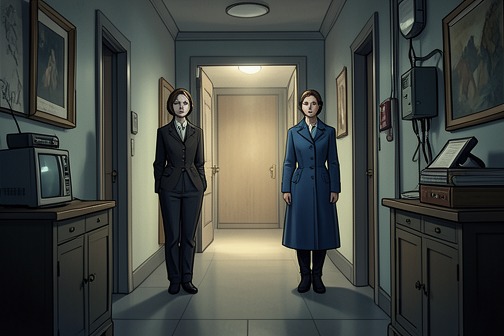
[Sofia Zetterlund’s recovery of her memories about Samuel Bai](entity:event-recall-event-sofia-zetterlund-s-reco-da2581ae5955) is a turning point in which apparent recollection gives way to recognition of how memory has been distorted. After words about [Charlotte Silfverberg](entity:character-recall-character-charlotte-silfverbe-17b4b253e58c)’s death leave Sofia frozen, the full memory returns: she realizes that she has combined separate events into a single imagined account. The scene does not simply supply a missing fact; it changes the status of what she remembers and reveals the fragility of the narrative she has built from it.
## The report that precedes recognition
The immediate context is a report about Charlotte’s death aboard the Finland ferry MS Cinderella. Witnesses said Charlotte had been alone on deck, climbed onto the railing, and jumped; they could not intervene in time, but alerted the coastguard. Her body was found the following morning. [Jens Hurtig](entity:character-recall-character-jens-hurtig-8c93b3135097) emphasizes that more than ten passengers corroborate what happened. The account is presented as a reported event supported by multiple witnesses, not as Sofia’s own observation.
The report supplies the immediate setting for the change in Sofia’s state. She stands motionless, caught by Ann-Britt’s words echoing in her mind. The transition from an externally confirmed death to an inwardly returning memory makes the scene’s sequence important: information about another person’s fate is followed by Sofia’s encounter with the unreliability of her own recollection. The evidence does not explain precisely which part of the report unlocks her memory, so the connection is best understood as a trigger in the scene rather than a fully specified cause.
## A memory recognized as a composite
Only after this pause does the full memory return. Sofia recognizes that she has been mixing memories and making a new memory out of several different events. Her image is of millions of water molecules pressed together into one snowball: separate elements have been compressed into something that appears singular. The metaphor describes not simple forgetting but the construction of a misleading coherence. What felt like one recollection was, in her new understanding, assembled from more than one source.
Sofia tests the recognition with the thought of whether something happened three times, then knows that the count is right. The moment confirms a detail for her without clarifying, in the available account, exactly what the three instances refer to. Its importance lies in the contrast between hesitation and certainty: she questions the number, then recognizes it as correct. The scene thus gives recovery a small, concrete measure while leaving the wider content of the memory only partly specified.
She also identifies the other memories as false and mixed with the period she spent working for [UNICEF](entity:organization-recall-organization-unicef-faa7b653c960) in [Sierra Leone](entity:location-recall-location-sierra-leone-fd5c25b396a9). That association gives the mistaken recollections a specific context, but does not make them reliable records of what happened there. The correction is therefore more complicated than recovering a single intact memory: Sofia must distinguish actual recollection from material drawn together across different events. The passage marks growing clarity, not a complete account of every memory or its origin.
## Therapy, trust, and the limits of recollection
Other episodes establish Sofia’s work as a therapist, though they are not presented as causes of this particular recovery. At her office in [Mariatorget](entity:location-recall-location-mariatorget-eb9baa0943d2), [Samuel Bai](entity:character-recall-character-samuel-bai-c37141db73e0) initially appears reserved and uninterested. When Sofia proposes that they speak Krio rather than English, he becomes more communicative. The detail shows how a change in language can alter the conditions of a conversation; it does not establish that Samuel’s response or treatment explains Sofia’s later recognition.
A separate encounter with [Linnea Lundström](entity:character-recall-character-linnea-lundstr-m-7879cebd59e7) likewise shows trust developing quickly in a clinical setting. After Ann-Britt informs Sofia that Linnea has arrived, Sofia goes to meet her; soon Linnea is seated across the desk, and Sofia is surprised by how quickly she has gained the girl’s trust. These moments make a useful contrast with the recovery scene. In her work, Sofia encounters the difficulty of opening a conversation and the possibility of establishing trust; in her own memory, the difficulty is discerning whether an apparently coherent account belongs to one event at all.
## Return to the present
As the memories become clearer, Sofia smiles at Jeanette and says she is glad she has come. This brief gesture and welcome form the scene’s outward consequence. The account does not say that every uncertainty is resolved, but it does show Sofia moving from stillness toward contact with another person. Recognition is not presented as a triumphant, exhaustive explanation; it is a shift in which she can distinguish some false recollections from what she now knows and respond to Jeanette in the present.
The scene’s force comes from the belatedness of that distinction. Sofia first experiences the assembled memory as if it were one thing; only afterward does she recognize its separate components and its false connections. The snowball image gives that process a shape, while the three-times hesitation and the Sierra Leone association keep it grounded in particular remembered details. Recovery here means revising the authority of memory itself: clarity begins when Sofia no longer treats every recollection as a faithful account of a single event.
Event 7
Madeleine’s decision to pursue revenge

[Madeleine’s decision to pursue revenge](entity:event-recall-event-madeleine-s-decision-to-2d780d662eda) takes shape on a mountain road where death seems only a wrong reflex away. Driving above the [Verdon River](entity:location-recall-location-074c8e9da435), she deliberately approaches danger and survives; the near-fatal passage turns her abstract commitment into a choice she experiences as freedom. Her hatred, she concludes, has kept her alive, and she will not surrender it in exchange for the promise of peace.
## The road and the danger
The scene opens in a landscape that makes the risk concrete. The sun is high above a mountain ridge, and the road snakes along its sides. Five hundred metres below, the Verdon River is a thin turquoise line. The safety barriers are low; a moment’s hesitation or a wrong reaction to another vehicle could send a driver over the edge. Above the road, another two hundred metres of mountain rises toward the bright blue sky, while warnings of landslides mark the possibility of being buried under falling rock.
[Madeleine](entity:character-recall-character-madeleine-e1dd3336745a) responds to those warnings by yelling as she passes them. The thought of being buried appeals to her, a detail that makes the danger more than an accidental backdrop: she is already drawn toward the possibility of death. Yet the drive is not simply an attempt to die. Her own thought gives the scene its governing condition: if she is to manage to live, then the people she holds responsible cannot be allowed to go on. Survival and revenge are bound together in her mind, even as the road offers an immediate chance to end her life.
## Hatred as a reason to live
Madeleine rejects the idea that a victim’s longing for revenge is merely a way of clinging to life. For her, hatred is not a consolation that might help her endure; it is what has kept her breathing since her time in [Denmark](entity:location-recall-location-denmark-c503f1b59838). The distinction matters: she does not imagine that revenge will restore an earlier, unharmed self. Hatred has already become the force sustaining her, and giving it up would mean relinquishing the reason she has found to continue.
She briefly asks herself whether the hatred will stop once its targets are dead and whether she will then have peace. The questions do not lead to a calculation of what revenge might achieve. She recognizes them as irrelevant and understands that she is free to choose. Her choice is described as a simple, original path. That decisiveness does not erase uncertainty about what will follow; instead, it refuses to make the choice depend on a promised emotional reward. [Revenge](entity:concept-recall-concept-93d250265032) is selected as an end in itself, not as a reliable route to calm.
## Two worlds and a chosen threshold
The road brings back knowledge Madeleine remembers learning when she was very small, while she was still unspoiled and able to acquire what she considers proper understanding. She recalls that people live in two worlds: a prosaic one and a poetic one. Some, in this remembered account, can experience them separately or as synchronous and symbiotic. The prosaic world resembles an X-ray image; the poetic world is like a naked, living human body. Madeleine identifies the latter as the world she has chosen to enter.
This distinction gives the dangerous drive a private structure of meaning. The visible road, its barriers, and the ravine belong to the material world of measurable risk. At the same time, Madeleine interprets the danger as an entry into a more intense state of existence, where life and death can meet. The remembered teaching does not make the physical threat disappear; it supplies a framework through which she can approach it without treating survival as the only value at stake.
## The near-fall and its consequence
After a bend, with the road sloping steeply downward, Madeleine closes her eyes and takes her hands off the steering wheel. For several seconds she could be heading directly toward the low, poorly maintained barrier and then into the deep ravine. The passage describes that interval not as a crash but as a liberating confluence: life and death at the same time.
When she opens her eyes, she is still in the middle of the road. The drop is safely on the other side of the roadway, and she has survived with several metres to spare. Her heart pounds, her body shivers, and she experiences happiness and exaltation: she has not been afraid of dying, yet feels light. The outcome reverses the immediate expectation of the scene without resolving her larger conflict. She has not reached the ravine or achieved revenge; she has discovered that she can expose herself to death and remain alive.
That survival reinforces the logic behind her decision. Madeleine regards death as a change of consciousness rather than a simple end: in her understanding, when the brain is disconnected from the heart, consciousness enters a state beyond time and space. From that belief she draws a grave implication: if death does not mean nonexistence, killing need not seem like sentencing another person to a lack of being. The scene therefore links her exhilaration at surviving the road to the moral framework through which she can contemplate violence. It does not show revenge completed or peace attained. It shows the moment she chooses hatred and faces the danger of death without letting fear make the choice for her.
Event 8
Victoria Bergman’s reunion with Sofia Zetterlund
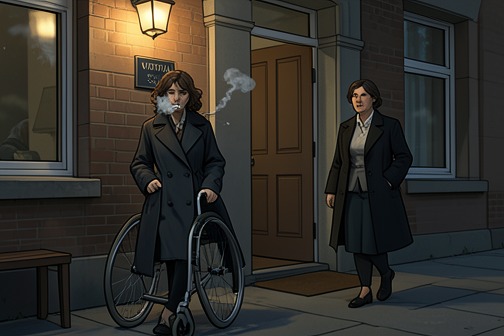
[Victoria Bergman’s reunion with Sofia Zetterlund](entity:event-recall-event-victoria-bergman-s-reun-af5d6b073e5c) at [Sunflower Nursing Home](entity:location-recall-location-974718283a50) turns recognition into a meeting between divided selves. A familiar face first appears as someone Victoria knows by another name; a deviation prompts memories to return, and Victoria approaches the woman as herself. The brief exchange confirms the emotional weight of the recognition without resolving every part of their history: Victoria says she has missed Sofia and is ashamed of how she behaved, while Sofia answers with a smile.
## Setting and Recognition
Victoria arrives at Sunflower Nursing Home twenty minutes after an earlier, unspecified event. Outside, she sees a woman smoking and leaning on a walking frame. The lamp above the entrance leaves the woman’s face partly in shadow, and smoke partly obscures it. Despite this partial view, Victoria knows the woman is [Sofia Zetterlund](entity:character-recall-character-sofia-zetterlund-6c27defc5853). The setting is ordinary and public, but the moment is not: Victoria recognizes someone who is also bound up with her own identity.
Recognition does not immediately become recollection. The narrative says that Victoria’s memories come back in a torrent only when she notices a deviation, then isolates the words “Her eyes.” That abrupt fragment makes the eyes a focal point in the process of recognition, but the passage does not explain exactly what the deviation is. Its sequence is significant: Victoria first identifies Sofia, then the cue releases memories, and only afterward does she go to her. The scene presents the return of the past as sudden rather than as a carefully ordered account.
## The Meeting
Victoria walks up to the woman and puts a hand on her arm. Her voice is choked as she says, “Hello, Sofia. It’s me … Victoria.” The introduction carries a double recognition: she names the woman as Sofia and identifies herself as Victoria. Rather than speaking as an observer who has found someone from her past, she approaches as the person whose name and memories have been set apart from Sofia’s. The hesitation in the greeting marks the difficulty of making that identification aloud, while the gesture establishes contact before the exchange develops further.
Sofia’s response is a smile. The passage gives no extended dialogue from her at this point, so the smile should not be treated as a complete explanation of her feelings or as proof that the history between them has been settled. Its placement nevertheless matters: Victoria’s declaration is received, not left unanswered. The scene moves from recognition at a distance to physical approach, then to a brief verbal acknowledgment and a visible response.
## Sofia’s Earlier Professional Life
The wider evidence identifies Sofia with a practice at [Mariatorget](entity:location-recall-location-mariatorget-eb9baa0943d2) and with her work as a therapist. In one session, [Samuel Bai](entity:character-recall-character-samuel-bai-c37141db73e0) initially seems reserved and uninterested. When Sofia suggests speaking Krio rather than English, he becomes more communicative. This detail establishes a practical aspect of her approach: she offers a change of language, and the interaction opens up. It does not establish that Samuel has any part in the reunion, but it gives context for Sofia’s life before the nursing-home encounter.
Another earlier scene shows Sofia responding when [Linnea Lundström](entity:character-recall-character-linnea-lundstr-m-7879cebd59e7) arrives. Ann-Britt informs her, and Sofia goes out to meet Linnea in the waiting room. Soon afterward, Linnea is sitting across the desk from her, and Sofia is surprised by how quickly she has gained the girl’s trust. Together, these scenes locate Sofia in relationships shaped by attention and communication. They also set her established professional identity against the reunion’s more intimate address: at the nursing home, Victoria does not approach her as a therapist, but as Sofia, the person she has missed.
## Regret and Significance
Victoria’s later words make the separation between the two selves emotionally explicit. She tells Sofia, “I’ve missed you,” then adds that, now she is sitting with her, she feels ashamed of how she behaved. The admission supplies a specific consequence of the returning memories: recognition brings not only a recovered connection but also an awareness of conduct Victoria regrets. The passage does not detail that behavior, and the reunion does not itself provide a full account of what occurred between them. Its emotional force rests instead on the contrast between the longed-for presence of Sofia and Victoria’s shame at the way she acted.
As an event, the reunion is a movement from apparent separation toward renewed contact, not a neatly completed reconciliation. The eyes prompt memory; the greeting names both women; the smile and Victoria’s confession allow affection and regret to coexist. The scene’s economy keeps the past partly unspoken, while making clear that the meeting matters because Victoria can once again address Sofia directly and acknowledge both her absence and her own responsibility.
Event 9
Jeanette Kihlberg and Sofia Zetterlund begin a relationship

[Jeanette Kihlberg and Sofia Zetterlund begin a relationship](entity:event-recall-event-jeanette-kihlberg-and-s-2e575140155e) in a sequence that joins sudden physical intimacy to a break in Sofia’s confused sense of time. Jeanette initiates their first kiss in a lift; Sofia’s initial surprise gives way to calm and happiness, while the pause in her racing thoughts helps her recognize that some of her memories of [Samuel Bai](entity:character-recall-character-samuel-bai-c37141db73e0) are false. Later, an unfinished confession from Jeanette and Sofia’s yes make the connection explicit and mutual.
## The kiss in the lift
After Jeanette arrives at Sofia’s workplace, the two leave together. As the lift doors close and it begins to descend, Jeanette steps toward Sofia, holds her face in both hands, and kisses her. Sofia stiffens at first, taken aback. Then her body softens, calm spreads, and she closes her eyes and returns the kiss. The moment brings an abrupt stillness: Sofia’s head goes quiet, and when the lift stops and they part, she recognizes what she feels as happiness.
The scene’s intimacy is conveyed through bodily change before either woman explains what the kiss means. Sofia’s surprise is followed by a settling of her pulse and breathing; her response develops from startled stillness into reciprocation. Jeanette acts first, but Sofia’s returning kiss makes the encounter more than an advance received in silence. The lift’s brief enclosed passage gives their relationship a threshold: when its doors open, Sofia is not simply continuing the day as before.
## A pause in Sofia’s confused memories
The kiss interrupts Sofia’s sense that events have been moving too quickly. She reconstructs the immediate sequence: she had been at her desk, looking through Samuel Bai’s records; Ann-Britt told her that Samuel had visited only three times; then Jeanette arrived and kissed her. When Sofia checks the time, she realizes that an hour has passed and that her memory of it contains a gap. The kiss seems to have stopped the rush long enough for her to notice what she can and cannot remember.
Sofia then distinguishes three clear memories of sessions with Samuel from other recollections that she recognizes as false. Those apparent extra sessions have become mixed with her time working for [UNICEF](entity:organization-recall-organization-unicef-faa7b653c960) in [Sierra Leone](entity:location-recall-location-sierra-leone-fd5c25b396a9). As the confusion lifts, she smiles at Jeanette and tells her she is glad she came. The relationship’s beginning is therefore also a moment of recognition: alongside the new intimacy, Sofia recovers a more reliable account of her recent encounters and sees that the remembered record of her treatment is not what it seemed.
## From shared walk to an answer
After leaving, Jeanette and Sofia cross [Södermalm](entity:location-recall-location-s-dermalm-4bc874ba03d7) by a route that resembles the [Sleepwalker](entity:concept-recall-concept-sleepwalker-48b429bd7af1)’s path: a semicircular detour from Swedenborgsgatan to Södra station, down to Ringvägen, past the [Clarion Hotel](entity:location-recall-location-8825075c8fa2), and north along Renstiernas gata toward the hills of [Vita Bergen](entity:location-recall-location-vita-bergen-29f6b0fcab61). The route links their emerging closeness to a pattern already associated with the Sleepwalker, even as the women now travel it together. Jeanette keeps an arm around Sofia’s waist, whispers in her ear, and kisses her neck. Their affection continues in small gestures rather than a declaration made all at once.
Later, over wine, Jeanette tells Sofia that she means a great deal to her, then falters as she tries to say what Sofia has helped her realize. Sofia prompts her to finish. The scene connects Jeanette’s hesitation to her former feeling that she ought to remain faithful to [Åke](entity:character-recall-character-ke-be10cae00723); that restraint is now gone, perhaps because she has signed the divorce papers. Jeanette’s words remain incomplete, but the change in her willingness to act is clear. Sofia’s smile is no longer shy, and Jeanette says yes to her. They kiss and leave the living room together, going upstairs. The first kiss in the lift thus becomes the beginning of an acknowledged relationship, not an isolated impulse.
## Narrative significance
The relationship develops through a contrast between interrupted memory and newly available feeling. Sofia cannot account for the hour that has passed, but she can identify the kiss, register her happiness, and separate three real treatment sessions from false recollections. Jeanette, meanwhile, moves from a spontaneous gesture to an answer that acknowledges what Sofia means to her. Neither moment resolves every uncertainty in their lives; together they establish a change in how the two women meet one another—as intimate partners rather than only in the roles that brought them together.
Event 10
Sofia Zetterlund discovers that Lasse is alive

[Sofia Zetterlund](entity:character-recall-character-sofia-zetterlund-6c27defc5853) discovers that [Lars Magnus Pettersson](entity:character-recall-character-lars-magnus-petters-7e6a4669e92c) is alive while searching online at her computer in her study. The confirmation unsettles the story she had believed about her own past: although he had betrayed her, she had not killed him. His continued life also brings her imagined account of other people into view as part of the same internal collapse.
## The Search and Its Evidence
Early in the morning, Sofia is seated at the computer in her study, staring at the screen. The address she finds for Lars Magnus Pettersson is the same one she already knows, on Pålnäsvägen in [Saltsjöbaden](entity:location-recall-location-saltsj-baden-5cbfe864a0d5). She also discovers that he travels frequently for work and finds his name among the participants at a conference in Düsseldorf held just three weeks earlier. The address and recent professional listing turn her suspicion into confirmation: he is alive and continuing a life beyond the one she had constructed around him.
## The Reversal of Her Belief
Sofia laughs when the evidence settles what happened. Lars Magnus Pettersson had betrayed her, but she had not killed him in response. The discovery reverses the assumed consequence of that betrayal, separating what she had believed she did from what actually happened. It also makes the imagined version of his fate less consequential to her than the recognition that she had been inventing lives for others as well as for herself.
## A Life Outside Her Enclosed World
Sofia considers that Lars Magnus Pettersson may still be living a double life, perhaps with another woman, as he had before. That possibility does not restore their relationship or draw him back into her experience. Instead, she recognizes that his life has moved on outside her enclosed world, and she is pleased by this. The scene therefore closes not with a reunion but with a changed relation to the story she had told herself: his independent existence no longer has to be absorbed into her own collapse.
## The Immediate Aftermath
The confirmation arrives while Sofia is absorbed in an escalating process of work. She still has tasks to finish before she can sleep for a few hours, and she feels focused enough to continue. The discovery gives her a moment of relief and perspective without ending that process; it changes what she understands about Lars Magnus Pettersson and her own imagined past, while she remains intent on the work ahead.
Event 11
Babi Yar massacre
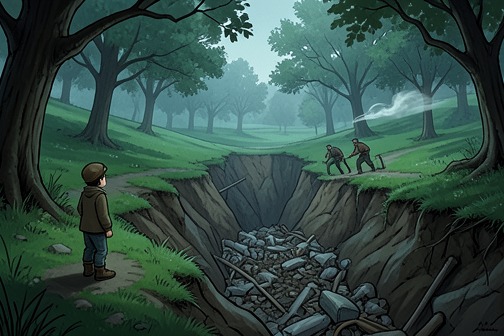
The [Babi Yar massacre](entity:event-recall-event-babi-yar-massacre-767c256abf0a) is the mass killing of [Kyiv](entity:location-recall-location-615f8407bea1)’s Jewish population that [Gilah Berkowitz](entity:character-recall-character-gilah-berkowitz-e2916f74d623) recalls witnessing as a child. In the novel, the ravine holds two histories at once: a mass grave hidden beneath a green park, and the place where Gilah saw her brothers led to their deaths after she had turned her family in. Her return in memory makes the atrocity inseparable from the guilt and survival choices that shape the rest of her life.
## The Order and the Site
The account situates the killings in autumn 1941, beginning with a public order dated 29 September. It instructed all Jews living in Kyiv and its suburbs to assemble at eight o’clock in the morning at the corner of Melnikova and Dokterieva Streets, near the cemetery. They were told to bring documents, money, valuables, and warm clothing; those who disobeyed and were found elsewhere were threatened with being shot. The notice thus presented a coerced gathering as an administrative requirement while making the consequence of refusal explicit.
[Babi Yar](entity:location-recall-location-babi-yar-f7b3f566f1bd) was a ravine at the city’s former boundary, described as an inhospitable place. The narrative also recalls that guards brought their wives and lovers there, turning the landscape into a setting for their own excursions while people were being killed. Before the massacre, the women’s ravine had symbolized love; in Gilah’s memory, that association is overwhelmed by what happened there. Its meaning does not settle into a single, recovered past: the same site carries the contrast between the life it once represented and the killing that transformed it.
## The Massacre
The killing is described as a systematic operation carried out by one German Sonderkommando and two Ukrainian police battalions. Gilah remembers hundreds of people being led to the ravine. Men, women, and children were among them, and the account emphasizes that age and sex offered no protection. In less than forty-eight hours, more than thirty-three thousand people from Kyiv’s Jewish population were murdered. The scale and speed of the operation make the ravine not merely the setting for individual deaths but the endpoint of an organized process of extermination.
The bodies were covered with earth, leaving a mass grave beneath the surface. In the novel’s present, the ravine has become an attractive, green park. That transformation is a pointed contrast, not a suggestion that the violence has been undone: the visible landscape can conceal what lies beneath it, and the apparent calm of the site coexists with the historical truth it covers. Gilah’s memory restores the buried event to the place, making the park’s beauty and the grave part of the same account rather than opposing versions of it.
## Gilah and Her Family
Gilah remembers hiding in tall grass near a clump of trees, about twenty metres from the ravine’s edge, because she wanted one last glimpse of her father and her two older brothers. She did not see her father there, but she saw her brothers among a group of young boys tied together with barbed wire. The boys were made to move while their group included those who were dead or unconscious. Both of Gilah’s brothers were still alive when they reached the edge of the ravine; they were made to kneel and were shot. The account gives the brothers’ deaths a place within the mass killing without making them representative of all the people murdered there: they remain Gilah’s family, seen by her at the moment she could not save them.
The remembered scene is tied directly to Gilah’s admission that she had turned in her own family. She kneels at the site in the present of the narrative, in the same posture as her brothers, and experiences the past and present together. She traces everything she has done in her life back to those autumn days. The massacre is therefore not only an event she witnessed; it is the turning point through which she understands her own actions and the identity she later adopts.
The novel places her betrayal within a wider history of informing. Under Stalin’s dictatorship, Gilah recalls, friends could be made into enemies and even committed Stalinists were unsafe. After the Germans arrived, the demands to inform continued with their targets reversed: Jews and Communists were now denounced. Gilah describes herself as having acted as others did in an effort to adapt and survive. That context does not erase her responsibility for betraying her family; instead, it shows the coercive political conditions in which she made the choice and the lasting consequences she carries.
## Memory and Consequence
Gilah’s recollection links the public scale of the massacre to a private history of loss, complicity, and survival. The narrative moves between the official notice, the mass killing, the deaths of her brothers, and the older woman’s return to the same place in memory. This structure makes the past active in the present: she is not simply recounting what happened but confronting the event as the origin of choices that followed.
Her survival depends, in her account, on becoming someone other than the Jewish girl she had been. She regards survival as possible by adapting into the identity of a strong young man, a transformation that makes the massacre’s consequences extend beyond the deaths at Babi Yar. The event marks the point where family, identity, and the possibility of an ordinary future are shattered. The ravine’s buried history and Gilah’s effort to live as someone else become parallel forms of concealment, neither of which can make the past disappear.
Event 12
Holodomor
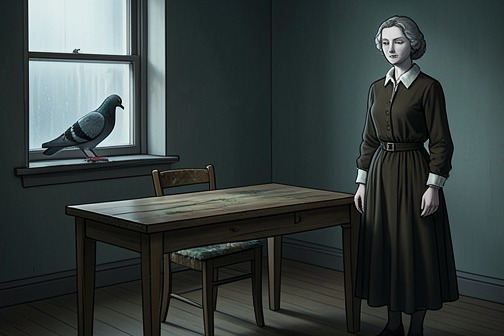
The [Holodomor](entity:event-recall-event-holodomor-edf9c8fa8e2d) is recalled through [Gilah Berkowitz](entity:character-recall-character-gilah-berkowitz-e2916f74d623)’s memories of famine and the death of her mother. In the scene, she listens for footsteps and mutters the famine’s name; the recollection joins a public atrocity to the specific losses her family endured.
## Historical and Personal Context
Gilah understands the Holodomor as Stalin’s stage-managed famine and an act of organized mass murder. Its effects enter her memory through stark contrasts at the family table: her father had pigeon to eat, while she had eaten grass. The famine is not an abstract historical episode in this recollection; it is the condition through which she remembers her mother’s death and her own deprivation.
## Her Mother’s Death and Burial
The famine took Gilah’s mother. Her family buried her outside the town, but starving people later plundered the grave because the recently dead could still be eaten. The detail makes the consequences of hunger extend beyond death: burial could not secure the dead from the needs of the living. Gilah’s memory holds her mother’s loss together with the violation of the grave.
## Memory and Historical Display
The recollection moves from the Holodomor to artifacts associated with Nazi crimes that have become museum exhibits. Gilah’s concluding thought, that everything sick ends up in museums, links the display of historical violence to the unresolved force of her memories. The passage places individual grief beside public remembrance without suggesting that the events are identical: both return as evidence of what human beings have done to one another.
Event 13
Ulrika Wendin’s abduction, captivity, and death
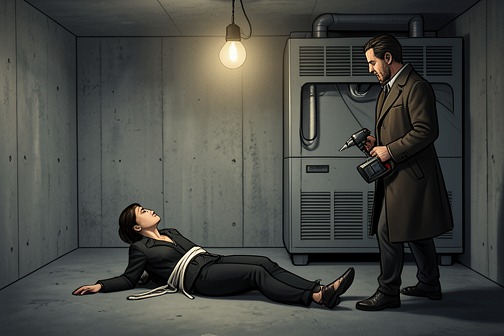
[Ulrika Wendin’s abduction, captivity, and death](entity:event-recall-event-9b3191b0ec32) follows a brief reversal of power that does not become a rescue: after enduring confinement and escaping her captor, Ulrika makes it into the snow but dies before she can find safety. The sequence links physical captivity to sensory deprivation, then to a fragile return of agency and hope, before the winter conditions overwhelm her. Its aftermath leaves [Jeanette Kihlberg](entity:character-recall-character-jeanette-kihlberg-0988accaa0dc) and [Jens Hurtig](entity:character-recall-character-jens-hurtig-8c93b3135097) confronting how long Ulrika survived and how little they were able to do for her.
## Confinement and the captor
The account presents Ulrika in an empty concrete room, exposed to a harsh bulb and restrained on the floor. A large ventilation unit interrupts the otherwise spare setting; the metal door is the room’s only other conspicuous feature. A man stands nearby holding a hammer drill. The scene’s limited surroundings make the tools of confinement, rather than any ordinary detail of a home, define the space.
The man is later identified in the encounter as [Rodya](entity:character-recall-character-rodya-a5a9c297fdcc). He is drunk, carries a bottle of vodka, and uses a mixture of apparent friendliness and threat toward Ulrika. She remains silent at first. When he removes the tape covering her mouth, she swallows her cry and does not answer his attempt to engage her. Only after he tightens a noose around her neck does she speak, addressing him by the name he has given and rejecting him. Her brief reply marks a change from enforced silence to a small, deliberate act of resistance, even though he still controls the immediate situation.
Rodya then frees Ulrika’s hands with a knife. This does not amount to a release: he continues to threaten her, and she remains in danger. The sequence keeps the distinction between physical opportunity and actual safety clear. A restraint has been removed, but the captor’s control has not yet ended, and the hammer drill remains in the room as an instrument that will acquire a different purpose.
## Reversal and escape
As the assault continues, Ulrika experiences a profound detachment from what is happening to her. She watches herself from near the ceiling and does not initially register her hand reaching across the concrete to take hold of something warm. The object is the hammer drill, still warm after Rodya has used it to make a hole in the ceiling. The distance between her observing self and her body is presented as part of the moment, not as a calm, planned strategy.
The drill’s noise is muffled as Ulrika turns it against Rodya. This is the decisive reversal in the room: the captor’s tool becomes the means by which she can resist him. The narration associates her strength with the earth beneath her, giving the action a stark contrast to the powerlessness of her restraint. The scene does not restore her immediately to safety. Instead, Ulrika later opens her eyes and finds herself able to move, still in a cellar, with her feet bound by duct tape and Rodya beside her, apparently dead. Her escape from the immediate threat is therefore a first threshold, not the end of the ordeal.
## Flight into the winter landscape
Ulrika eventually gets away from the cellar and moves through the winter landscape. The cold makes her breathing irregular, and dawn appears only as a thin strip above the trees. She hears a helicopter approach, descend, and fall silent at a distance of about a kilometre. She thinks it may be near the house where she was held, and the possibility of rescue gives her a reason to hurry back in that direction.
The attempt to retrace her route fails because the wind has covered her tracks. Ulrika keeps moving despite numbness in her feet and the injuries caused by the rough ground. She interprets pain as evidence that she is alive and lets the helicopter’s presence sustain the possibility that someone may have come to help her. For a short time, the prospect of a future seems possible again. Yet the landscape offers no reliable route: the same wind that erases her tracks removes the trail she needs to find her way back.
As she continues, the cold alters her perception. Her body is overwhelmed by it, while her mind tells her that she is sweating and makes her clothes seem scalding. The contradiction matters because it turns the final stage of her flight into a struggle against sensations that can no longer guide her safely. Ulrika tears off her oversized overalls, lies naked in the snow, and understands that she is dying. Her last thought that life continues gives the death scene a bleak separation between the world’s continuation and the individual life ending within it.
## Forensic account and significance
After hearing the pathologist’s report, Jeanette and Jens sit together in silence at [Kronoberg Police Headquarters](entity:location-recall-location-kronoberg-police-hea-7c09446540df). The account of what Ulrika endured has left them unable to respond. The pathologist explains that the captors used living mummification, an ancient technique associated, among others, with certain sects within Japanese Buddhism. In the method described, a dry place with limited oxygen is combined with a diet of seeds, nuts, bark, and roots to reduce body fat, while tree sap reduces bodily fluids. In Ulrika’s case, the report identifies a form of downy birch as part of this process.
The pathologist also describes sensory deprivation: isolation in a space screened from light and sound, where the victim is denied ordinary sensory information. He stresses that survival for more than a few hours in such conditions is extremely rare. Ulrika’s ability to survive as long as she did, escape, and travel away under her own power is therefore presented as extraordinary, though it does not prevent her death outside.
The event’s central reversal is consequently incomplete. Ulrika escapes the room and the immediate control of her captor, but the escape brings her into an environment that offers no dependable rescue. The helicopter briefly seems to promise help; the wind erases the tracks that might have led her back; and the cold ultimately defeats the possibility of survival. The forensic explanation makes the earlier confinement legible as a sustained assault on the senses and the body, while Jeanette and Jens’s silence registers the human consequence of learning that Ulrika endured so much and still died alone in the snow.
Event 14
Sigtuna College initiation ritual
The [Sigtuna College initiation ritual](entity:event-recall-event-6925956ef383) is a filmed hazing ceremony in which [Hannah Östlund](entity:character-recall-character-hannah-stlund-b60d62b6b31f), [Jessica Friberg](entity:character-recall-character-jessica-friberg-0b38fa9a5d9f), and [Victoria Bergman](entity:character-recall-character-victoria-bergman-b61a73067924) are subjected to a degrading spectacle by masked students. The footage later allows [Jeanette Kihlberg](entity:character-recall-character-jeanette-kihlberg-0988accaa0dc) to identify the girls and recognize the incident as the initiation that got out of hand and led [Hannah](entity:character-recall-character-hannah-fb0714f3cb68) and [Jessica](entity:character-recall-character-jessica-f1d7f2924a7f) to leave the school. The ritual also reappears in [Madeleine](entity:character-recall-character-madeleine-e1dd3336745a)’s memories of a hidden video, where its images are bound to punishment and to a childhood she cannot separate from the people who raised her.
## The footage and its recognition
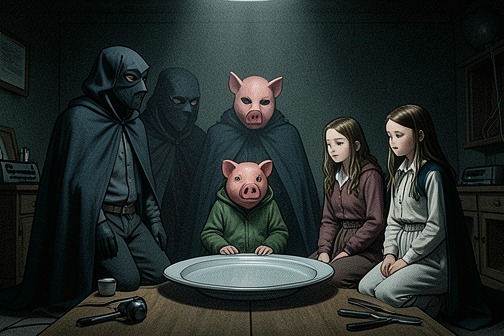
The ceremony enters the investigation through a recording that [Jens Hurtig](entity:character-recall-character-jens-hurtig-8c93b3135097) and Jeanette watch together. Its poor, flickering picture suggests to Hurtig that it was filmed off a television, probably from an old VHS. The image first reveals a homemade pig mask: its snout appears to be fashioned from a plastic mug. As the camera draws back, it shows more masked people in capes and three girls kneeling behind a large plate holding something the investigators cannot identify from the screen. The recording’s roughness does not obscure the central arrangement: masked witnesses on one side, exposed girls on the other.
Hurtig points out two of the kneeling girls, and Jeanette recognizes Hannah and Jessica from a school-yearbook photograph. This turns the footage from an anonymous scene of school cruelty into evidence connected to people already known in the case. Jeanette then identifies the third girl as Victoria Bergman: thin, fair-haired, with bright blue eyes. Her impression that Victoria seems to smile is qualified by uncertainty. It does not look amused to Jeanette; it looks mocking, almost as if Victoria knows what is coming. Jeanette also feels that Victoria is vaguely familiar, but the recognition does not yet yield an explanation.
The film supplies a verbal marker of the occasion. One masked girl steps forward and welcomes the kneeling girls to [Sigtuna College for the Humanities](entity:location-recall-location-sigtuna-college-for-db40923a6c9c). Someone then empties a bucket over them; the three spit, cough, and hiss. Jeanette connects the footage to what [Annette Lundström](entity:character-recall-character-annette-lundstr-m-29c4d5ec01a5) had described: an initiation ritual that went too far and led Hannah and Jessica to leave the school. The scene therefore gives a concrete, recorded form to an event previously carried into the investigation through another person’s account.
## The ritual’s degrading spectacle
The ceremony combines an institutional welcome with an act of public humiliation. Its opening language presents the scene as an organized school occasion, while the pig masks and bucket of water make the welcome an instrument of degradation. The girls are not simply named as newcomers; they are made to kneel, soaked, and placed before the masked group. The contrast between formal welcome and physical abasement is central to what Jeanette sees on the tape.
The plate deepens the ritual’s humiliation, although the footage Jeanette watches does not let her identify its contents. In the final sequence, Victoria leans forward and begins to eat. A girl in the background removes her mask and vomits; the few seconds her face is visible are enough for Jeanette to recognize her as Annette Lundström. Annette’s presence complicates the division between those conducting the ceremony and those subjected to it: she is initially part of the masked group, but her brief unmasking reveals a physical reaction that the costume had concealed. The recording establishes what she does and what Jeanette recognizes, without explaining her motive or the precise contents of the plate.
Jeanette and Hurtig watch the remainder of the film in shared silence. Hurtig’s muttered condemnation of the participants as upper-class brats registers disgust, but the footage itself gives the investigators something more specific than an expression of disapproval: identifiable faces, a recognizable school setting, and a sequence of humiliating acts. The film’s limitations remain visible, too. Its image is unstable, and the plate is indistinct; recognition depends on the investigators’ knowledge of the people in the frame.
## Madeleine’s memory of the film
The ritual returns in a different context through Madeleine’s memories of a video her foster parents had hidden. She remembers Charlotte catching her watching it. In that recollection, the images resolve into three girls, one eating excrement, surrounded by people in pig masks. The correspondence with the recording Jeanette watches is unmistakable in its central details, though the investigators could not identify the plate’s contents from the footage alone. Madeleine’s memory makes explicit what remained visually unclear in Jeanette’s viewing.
For Madeleine, the film is not only a record of the ceremony. Watching it leads to punishment: she is grounded, and P-O visits her every night. The memory of the masked figures also recalls the pigpen at Viggo’s farm, joining the school footage in her mind to another setting of degradation. These remembered connections show how the ritual persists beyond the filmed event: it returns through images and associations that Madeleine carries into adulthood, rather than as a detached account of an old school custom.
The recollection is surrounded by memories of Charlotte’s hostility. Madeleine recalls Charlotte lying to a psychiatrist at University Hospital in [Copenhagen](entity:location-recall-location-copenhagen-aea5870325a0) and shouting at her in the hospital car park, calling her an unwanted, horrible child and saying that Charlotte’s life had been ruined when Madeleine came to them. Against those memories, the question of what Madeleine’s childhood might have been like with her real mother brings an emotional force she cannot put into words. Her feelings have been dormant so long that she experiences them as stored in her body, unattached to a particular event. The ritual’s place in this recollection is therefore bound not only to the humiliation on the screen but also to the punishment and rejection that followed Madeleine’s encounter with it.
## Significance in the investigation and narrative
The recovered film links several otherwise separate forms of knowledge. Annette’s account gives Jeanette a description of an initiation that went wrong; the recording lets Jeanette identify Hannah, Jessica, Victoria, and finally Annette herself. Madeleine’s later recollection supplies a personal memory of the same distinctive combination of girls and pig masks, while adding that one girl ate excrement. Together, these perspectives make the ceremony both investigative evidence and an image with a continuing emotional life.
The ritual’s significance rests partly in that difference of perspective. For Jeanette and Hurtig, the footage is something to inspect: faces must be matched to photographs and testimony, and the scene’s meaning reconstructed from a damaged recording. For Madeleine, the video is a source of remembered fear whose discovery leads to confinement and nightly visits from P-O. The event is thus disclosed in fragments—first as a filmed spectacle, then as an identifiable episode in the school’s history, and finally as part of a private memory shaped by punishment. It exposes the violence concealed inside the language of initiation without making every participant’s role or intention equally clear.
Event 15
Viggo Dürer’s child murders
[Viggo Dürer’s child murders](entity:event-recall-event-da5f0115ec86) emerge as a series of killings whose repeated methods eventually connect separate crime scenes to a much larger archive of victims. What begins as the investigation of individual boys’ deaths becomes evidence of a campaign extending across decades, even as the full scale of the crimes remains beyond the cases initially solved.
## The Cases Become a Pattern
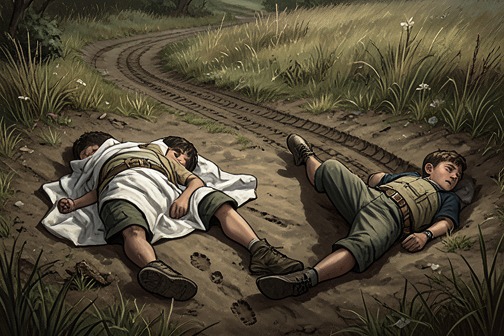
The investigation gathers force as boys are found in different parts of [Stockholm](entity:location-recall-location-stockholm-ecdf20d7e75e) and its surroundings. When a second boy is discovered at [Svartsjölandet](entity:location-recall-location-svartsj-landet-943db10f455d), the body bears signs of extreme violence and the precision seen in the earlier case. [Jeanette Kihlberg](entity:character-recall-character-jeanette-kihlberg-0988accaa0dc) concludes that the two deaths are probably connected and that the police are dealing with a double murder. The scene offers little that can immediately identify a perpetrator: investigators find two shoeprints, one much smaller than the other, and vehicle tracks, but these traces cannot yet be compared with anything useful.
Four weeks after the first boy was found, a third victim is discovered at the boules club below [Danvikstull](entity:location-recall-location-danvikstull-adffc11957eb). Experts describe the preservation of the body as successful embalming. The recurrence of carefully handled bodies turns separate discoveries into a recognizable pattern, although the evidence available at each scene remains limited. The physical similarities support a case linkage; they do not, by themselves, establish who was responsible.
## The Hidden Archive and Wider Scope
The investigation’s apparent boundaries collapse when forensic officers search [Viggo Dürer](entity:character-recall-character-viggo-d-rer-c0ec61eab959)’s cellar at [Hundudden](entity:location-recall-location-4363f43663e3). Alongside Polaroids, they find a recording of [Samuel Bai](entity:character-recall-character-samuel-bai-c37141db73e0) chained and struggling against a man whom Jeanette Kihlberg and [Jens Hurtig](entity:character-recall-character-jens-hurtig-8c93b3135097) recognize as the person found dead in a cottage in [Lapland](entity:location-recall-location-bd5982d69f39). The recording connects the child-murder investigation to another act of violence and places Samuel among Dürer’s victims.
The cellar also contains files and folders, including copies of photographs of the bodies from [Thorildsplan](entity:location-recall-location-thorildsplan-2e58458fc322), Svartsjölandet, Danvikstull, and [Barnängen](entity:location-recall-location-barn-ngen-94abb05a24b5). In a separate room, an investigator documents an extensive collection of preserved remains associated with forty-four boys, photographs dated by hand from October 1963 to November [2007](entity:time-recall-time-2007-a3981f21d164), and eight dried hands. The photographs have no names or locations, leaving the victims’ identities and the circumstances of many deaths unresolved even as the collection makes the scale and duration of the crimes unmistakable.
The files point beyond the four cases the investigators have solved: evidence indicates another forty bodies. The material is to be passed to [Europol](entity:organization-recall-organization-europol-fe03160a229c), so the conclusion of the Stockholm investigations does not amount to a complete accounting. By the time the archive is uncovered, the people most directly involved are dead, and the evidence opens a much wider field of inquiry without restoring the lives it records.
## The Forensic Record and Its Limits
[Ivo Andrić](entity:character-recall-character-ivo-andri-5a29869ecc27)’s inventory of the cellar makes clear that the collection was not merely a store of evidence but an arrangement of deliberately preserved objects. The preserved material had been treated with a combination of taxidermy and embalming, with ordinary clay used as stuffing; in most cases, the clay appeared to be fuller’s earth not found in Sweden. Photographs were suspended along four steel cables, while other objects had been arranged into an assembled figure on the floor. The clinical language of the report struggles to contain what it records, but its details establish a methodical practice rather than an isolated act of concealment.
The archive is also incomplete as a record of individual lives. The photographs carry handwritten dates but no names or locations, and the stored files widen the inquiry without identifying every victim or explaining each death. That gap matters: the physical evidence reveals the reach and duration of the crimes, yet leaves investigators with traces of children whose identities and histories cannot be recovered from the collection alone.
## Death and the Limits of Closure
The discovery of the archive does not lead to a reckoning with Viggo Dürer: he is found dead in a park in [Kyiv](entity:location-recall-location-615f8407bea1), shot in the back of the head, and Iwan Lowynsky is left to handle the murder until Europol takes over. The investigators also conclude that the bodies cremated on Dürer’s boat were probably [Henrietta Dürer](entity:character-recall-character-henrietta-d-rer-67739475841c) and [Anders Wikström](entity:character-recall-character-anders-wikstr-m-50ff4c53d62b). These deaths sit alongside the evidence of the child murders without resolving every circumstance surrounding them. With the people directly involved dead, the files can widen the inquiry to dozens more possible victims, but cannot supply the testimony or complete accounting that would turn the surviving evidence into a full history.